
32 CANADIAN BATTLE GROUP
The Lorne Scots Regiment
The Lorne Scots trace their origins to 1866 with the formation of the Peel and Halton militia battalions, which later incorporated Dufferin County. Influenced by strong Scottish traditions, the unit adopted highland dress, a pipe band, and the name “Lorne Scots” in the late 19th century. Through amalgamations and contributions to both World Wars, the regiment evolved into today’s Lorne Scots (Peel, Dufferin and Halton Regiment), serving as a Light Infantry unit within the Canadian Army Reserve.
The Governor General’s Horse Guards
The Governor General’s Horse Guards is Canada’s oldest cavalry regiment, with origins dating back to 1822. Evolving from local volunteer cavalry troops into a modern armoured reconnaissance unit, the regiment has served in major conflicts from the North-West Rebellion to the World Wars and continues to provide reconnaissance soldiers to 32 Canadian Brigade Group.
The Queen’s York Rangers
The Queen’s York Rangers trace their origins to York militia units formed in 1776 during the American Revolutionary War. Over the centuries, the regiment evolved from infantry and mounted troops into a modern armoured reconnaissance unit. Today, it serves as the armoured reconnaissance regiment of 32 Canadian Brigade Group, combining historical traditions with modern operational roles.
2 Intelligence Company
2 Intelligence Company originated in 1993 as part of a nationwide effort to modernize and expand military intelligence capabilities within the Canadian Army Reserve. Based in Toronto, the unit provides trained intelligence personnel to support 32 Canadian Brigade Group and other CAF formations. Its members have contributed to domestic operations and overseas deployments, including missions in the Balkans, the Middle East, and Afghanistan.
7th Toronto Artillery
The 7th Toronto Regiment, Royal Canadian Artillery, traces its origins to Toronto artillery units formed in the early 19th century. Over time, these batteries evolved through multiple redesignations, served in major conflicts, and were eventually consolidated into today’s Reserve artillery regiment. The unit now provides howitzer and mortar fire support for 32 Canadian Brigade Group.
The 56th Field Artillery Regiment
The 56th Field Artillery Regiment, RCA, is a Reserve artillery unit based in southwestern Ontario, grounded in militia traditions dating back to 1866. After converting from infantry in the mid-20th century, it has served in multiple forms such as anti-aircraft and field artillery and continues to provide vital fire support, training, and expertise within 32 Canadian Brigade Group.

32 Combat Engineer Regiment
32 Combat Engineer Regiment is a Reserve engineer unit in Toronto that traces its roots to the early 20th century. Built from several historic engineer and field companies, the regiment provides vital combat engineering capabilities—such as mobility, counter-mobility, demolition, and infrastructure support—to 32 Canadian Brigade Group. Its soldiers have contributed to major domestic operations and international missions around the world.
32 Signal Regiment
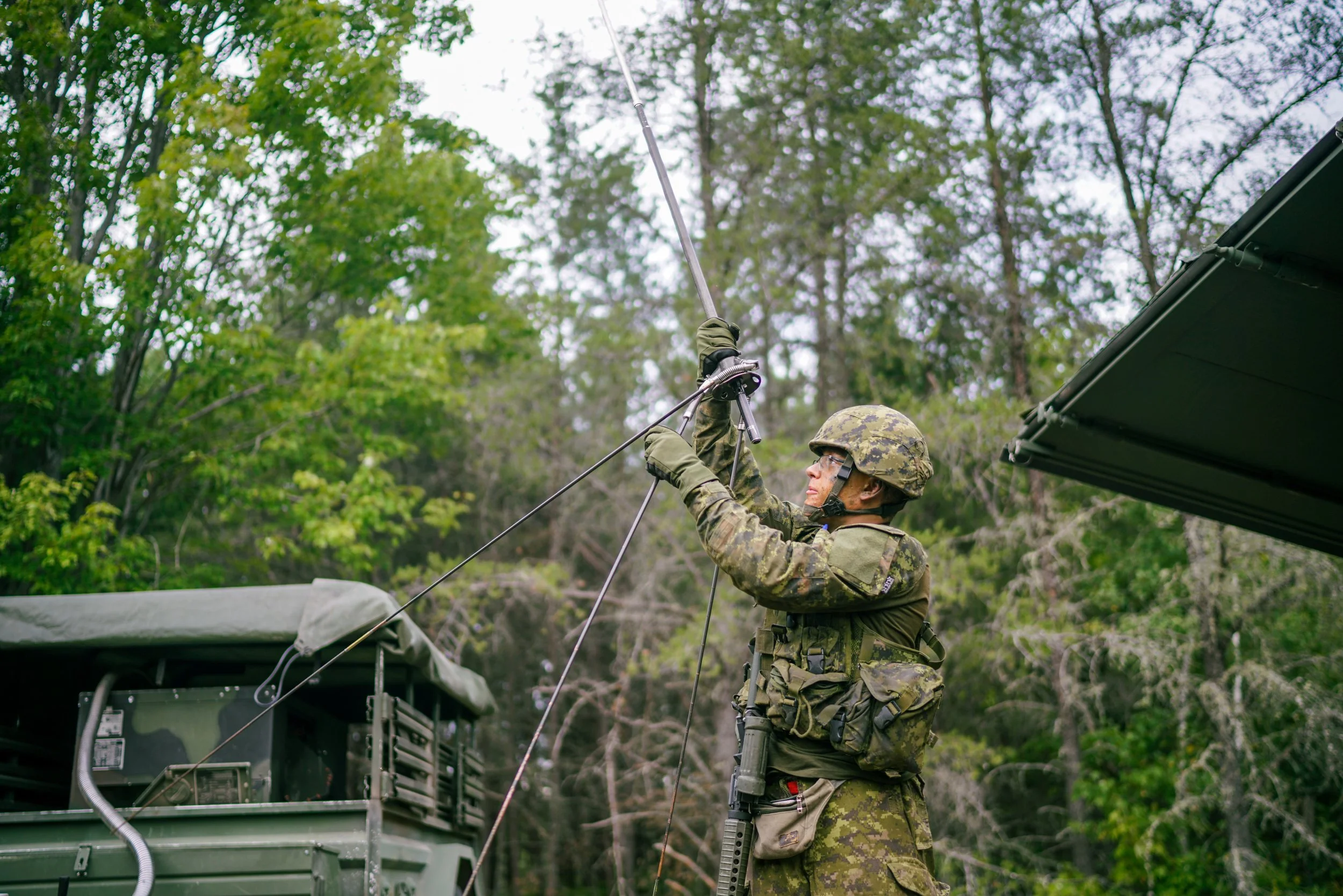
32 Signal Regiment is the communications unit of 32 Canadian Brigade Group, with origins going back to 1907. Built from several early signalling and wireless sections in Toronto, the regiment provides vital tactical communications, information systems, and network support for domestic operations and overseas missions.
The Queen’s Own Rifles of Canada
The Queen’s Own Rifles of Canada, founded in 1860 in Toronto, is one of Canada’s oldest reserve regiments. Formed as a volunteer rifle battalion, it has served in major conflicts including the Fenian Raids, the North-West Rebellion, both World Wars, and modern international missions. Today, it remains a rapid-response light infantry regiment within 32 Canadian Brigade Group.
THE ROYAL REGIMENT OF CANADA
The Royal Regiment of Canada traces its origins to 1861, when fears of an American invasion led to the creation of a volunteer militia in Toronto. Over the decades, the unit evolved through several name changes, participated in major national campaigns, and contributed troops to the Canadian Expeditionary Force during the First World War. Through amalgamations and expansion, it ultimately became The Royal Regiment of Canada in 1939.
48th Highlanders of Canada
The 48th Highlanders of Canada is one of Toronto’s most iconic and historically distinguished infantry regiments. Founded in 1891, the regiment has served Canada in every major conflict since the South African War, including both World Wars and numerous peacekeeping and domestic operations. Known for its proud Highland traditions, the 48th is easily recognized by its MacKenzie tartan, distinctive blue hackle, and its longstanding commitment to excellence in drill, discipline, and operational readiness.

The Toronto Scottish Regiment
The Toronto Scottish Regiment, founded in 1920, is a reserve light infantry unit with strong Scottish traditions. It served with distinction in the Second World War, most notably in Northwest Europe and has contributed soldiers to international missions from Korea to Afghanistan. Today, it continues its light infantry role within 32 Canadian Brigade Group.
The Lincoln and Welland Regiment
The Lincoln and Welland Regiment traces its roots to 1863, when volunteer infantry companies were raised in the Niagara region. Formed through the joining of the Lincoln and the Welland Militias, the regiment served in the Fenian Raids, the World Wars, and numerous peace support missions. Today, it remains the Reserve infantry regiment of the Niagara area under 32 Canadian Brigade Group.
32 Service Battalion
32 Service Battalion traces its roots to the early 20th-century Canadian Militia service and the later formation of specialized logistics units in Toronto. Over time, several supply, transport, medical, and maintenance organizations were combined under one structure, eventually forming today’s 32 Service Battalion. The unit provides essential combat service support, including transportation, supply, maintenance, and food services, to 32 Canadian Brigade Group.